Concrete Paths Mildura, Laid to Drain and Finished for Grip
Concrete Paths & Footpaths Experts
Peak Concreting Mildura is a local concrete contractor delivering residential and commercial concreting across Mildura and the Sunraysia region, on both sides of the Murray. The work covers concrete driveways, slabs and footings, exposed aggregate, coloured, stamped and honed finishes, polished floors, paths, kerbs, retaining walls, sealing, resurfacing and repairs. Every job starts with the ground: stable Mallee sand, reactive clay pockets or damp, salt-prone irrigation blocks each get the base, mix and membrane they need. Pours are timed for the cooler early hours and cured properly, because curing in the dry Sunraysia heat decides how long a slab lasts. Every quote is fixed and written after an on-site measure.
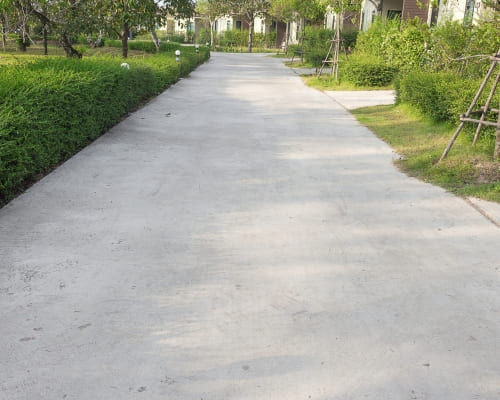
Concrete paths in Mildura carry people, bins, prams and barrows to the front door, down the side of the house and through the garden, and they also manage water around the home. Peak Concreting lays front entry paths, side access, paths around the house, garden walkways and footpaths, with falls away from the walls, the surface kept below the damp course, mesh and closely spaced joints for long narrow runs, and a broomed or decorative finish for grip. On sandy Mallee ground the base is compacted properly, beside older homes on damp or salty blocks a membrane goes underneath, and in summer every path is poured early and wet-cured. Call 0485 032 128 for a free on-site measure and a fixed written quote for concrete paths in Mildura.
Peak Concreting Mildura
Concrete Paths Mildura: Front Paths, Side Access and Garden Walkways
Concrete paths Mildura homes use are slabs built for foot traffic rather than cars, so they are thinner than a driveway but still need a proper base, reinforcement and joints. A well-laid path stays level, sheds water and keeps sand and mud out of the house for decades.
Front entry paths
The front path is the first thing visitors walk on, so it is built for looks as well as use. A path from the street or driveway to the front door is usually around 1.2m wide, laid straight or gently curved, and finished to match the driveway or the house. A small landing at the door gives room to stand while it opens, and the surface is kept below the door threshold so rain does not run inside.
Concrete paths around and next to the house
A concrete path around the house protects the base of the walls from splashing mud, gives a clean place for bins and hoses, and helps keep water away from the footings. Paths next to the house must fall away from the walls, sit below the damp course and keep weep holes clear. They are also laid with care around downpipes, taps and gas or water meters so access is kept.
Garden walkways and footpaths
Garden walkways link the back door to the clothesline, shed, vegetable beds and gate. They can follow curves and change width, and a lighter colour or exposed aggregate finish suits a garden setting. Footpaths along a front fence or within the property are laid the same way. Work on the council nature strip or a public footpath needs council consent first, which is checked before quoting.
Concrete driveways and paths poured together
Many jobs combine a new driveway with the paths that lead off it. Pouring both in the same job keeps the colour and finish consistent, saves a second setup and lets the falls be designed together so water runs to one place. The path is still built to path thickness, with an expansion joint where it meets the driveway. The concrete driveway page covers the driveway side of the job.
Peak Concreting Mildura
Building a Concrete Pathway That Drains: Falls, Damp Courses and Runoff
Most problems with concrete paths come from water, not traffic. A concrete pathway that drains properly protects the house as well as the path.
Falls away from the house
Every path beside a building is laid with a fall away from the walls, commonly around 1 in 100 or steeper, so rain and garden water run to the lawn, a garden bed or a drain rather than pooling against the house. Longer paths fall towards a grated strip drain or a pit connected to stormwater. Flat spots are avoided, because standing water leaves stains and slippery algae.
Staying below the damp course and weep holes
Brick homes have a damp-proof course and weep holes near the base of the walls. A path built up against them lets water and termites bypass the protection and can bring damp into the wall. The ground is excavated so the finished path sits clearly below the damp course, weep holes stay open, and any termite barrier around the slab edge is left visible for inspection.
Paths on Mallee sand and clay pockets
Much of the ground around Mildura is deep sandy calcareous soil, which drains well but can wash out or settle if the base is not compacted. A compacted crushed rock base under the path stops that. In patches of Red Sodosol clay, the subsoil swells and shrinks with moisture, so paths over clay get closer joints and the base is kept consistent so the path moves evenly rather than cracking.
Peak Concreting Mildura
Why Choose Peak Concreting for Concrete Paths in Mildura
A path is a small job, but it is the one that decides whether water stays away from the house. Peak Concreting sets out every path with the owner, checks the falls, the damp course and the downpipes before pricing, and lists the base, mesh, finish and joints on the quote.
Early pours and wet curing in Mildura summers
Paths are thin and narrow, so they lose moisture quickly. Mildura receives only about 270 to 290mm of rain a year and regularly passes 40C in summer, and on those days fresh concrete can dry faster than it bleeds, which causes surface cracking and a weak, dusty finish. Summer paths are poured in the early morning, an evaporation retarder is used during finishing, and the path is kept damp under hessian or sealed with a curing compound for at least three to seven days.
Salt and damp beside older homes
Many older homes in the Sunraysia irrigation districts sit on blocks with shallow water tables and salt in the ground. Salt rising into a path can flake the surface and stain it white. Beside these homes the path is laid on a membrane where the ground stays damp, the mix is upgraded where needed, and the falls are designed so water is not trapped against the house.
Peak Concreting Mildura
What a Concrete Path Costs in Mildura
A plain broomed concrete path is one of the most economical ways to get a hard surface around a home. Coloured, exposed aggregate and honed paths cost more, and long paths with many turns, steps or tight access cost more per square metre than a simple straight run.
How concrete path and pathway cost is worked out
Concrete path cost is worked out per square metre, then adjusted for the job. The area and thickness set the amount of concrete and mesh. The finish adds to it, from a plain broom finish at the lower end to decorative finishes higher up. Formwork for curves, steps, strip drains and connections to stormwater all add. Every quote is a fixed written price after an on-site measure.
Access, demolition and site preparation
Narrow side passages mean the concrete may need to be barrowed or pumped in, which adds labour or equipment. Removing an old path, pavers or garden edging adds demolition and disposal. Where the ground needs building up or cutting down to get the right falls below the damp course, extra excavation or fill is included. These items are listed separately on the quote.
Peak Concreting Mildura
Concrete Paths Versus Pavers, Gravel and Stepping Stones
Concrete is not the only way to build a path, and each option suits different places.
Versus pavers
Pavers look good and can be lifted to reach pipes underneath, but every joint lets in weeds and ants, and on sandy ground the bedding sand can wash out and the edges can sink. A concrete path is one piece with only planned joints, so it stays level and needs little upkeep. Laying pavers properly needs a compacted base too, so the cost difference is often smaller than expected.
Versus gravel and stepping stones
Gravel is cheap and lets water soak in, but it scatters onto lawns, is hard to push a barrow or pram across and gets tracked into the house. Stepping stones suit a light-use garden walk but not daily access to bins or the clothesline. A concrete path gives a smooth, continuous surface for wheels, and an exposed aggregate or coloured finish keeps a natural look.
Peak Concreting Mildura
Path Thickness, Width, Mesh and Joints
A path that lasts is built to sensible dimensions, with reinforcement and joints that suit a long, narrow slab.
How thick a concrete pathway should be
A residential path is typically 75 to 100mm thick on a compacted base, with 100mm the usual choice where a path may carry a ride-on mower, a loaded trailer or occasional vehicle crossing. Where a car or truck will cross the path, that section is built to driveway thickness. Concrete strength of around 20 to 25MPa suits most paths, upgraded on damp or salty ground.
Path widths for bins, prams and side access
A 1m path is the practical minimum for walking. Around 1.2m allows a wheelie bin, pram or wheelbarrow to pass comfortably and suits most front paths and side access. Wider paths of 1.5m or more suit main entries or two people walking side by side. Gates, downpipes and air-conditioning units along a side passage are measured so the path clears them.
Mesh and control joints on long narrow paths
Paths are reinforced with light steel mesh supported on bar chairs so it sits in the slab rather than on the ground. Because a narrow slab tends to crack across its width, control joints are saw-cut or tooled at regular spacing along the path, typically every 1.2 to 1.5m on a standard path, and an expansion joint separates the path from the house slab, driveway and fixed structures.
Peak Concreting Mildura
Path Finishes and Ideas: Broomed, Exposed Aggregate, Coloured and Honed
A path can be purely practical or a design feature, and the finish decides both its look and its grip.
A broomed finish for grip
A broomed finish drags a stiff broom across the fresh surface to leave fine ridges. It is the most common path finish because it gives good grip in wet weather and suits any home. The broom lines run across the path so feet and wheels grip in the direction of travel. A smooth edge strip along each side gives a neat border.
Decorative concrete path ideas
Exposed aggregate shows natural stones for a textured, grippy surface. Coloured concrete adds sandstone, charcoal or terracotta tones to match the house. A honed finish grinds the cured path back to a smooth, matte stone surface that suits courtyards, front entries and paths beside a pool, and it is sealed with an anti-slip additive so it keeps grip when wet; the honed concrete page explains the finish levels. Borders, curves and stepping-pad layouts with gravel between them add interest. The exposed aggregate concrete and coloured concrete pages show these finishes in more detail.
Steps and gentle ramps at level changes
Most Mildura blocks are fairly flat, but paths still meet steps at doors, porches and garden levels. Concrete steps are formed with even riser heights and deep treads so they are comfortable and safe. Where step-free access is wanted for prams, bikes or wheelchairs, a gentle ramp replaces the step, and a gradient around 1 in 14 or flatter suits wheelchair use.
TESTIMONIALS
What Our Concrete Paths & Footpaths Customers Say About Us
The Process
3 Step Process For Your Concrete Paths & Footpaths Needs

1. Free On-Site Quote
The path route is set out with the owner, falls, the damp course and the downpipes are checked, and a fixed written price is given for the base, mesh, finish and any old path removal.

2. Base Prep and the Pour
The ground is excavated below the damp course, a crushed rock base is compacted, and formwork and mesh are set; the path is poured early in the day with a fall away from the house.

3. Curing and Handover
The surface is broomed or finished as chosen, control joints are cut along its length, and the path is wet-cured for several days before it is handed back and cleaned up.
Concrete Paths & Footpaths In Mildura
FREQUENTLY ASKED QUESTIONS
Everything you need to know about our Concrete Paths & Footpaths In Mildura
How much does it cost to lay a concrete path?
It depends on the area, thickness, finish and access. A plain broomed path is the most economical, and decorative finishes, curves, steps, drains and old path removal add to the price. A fixed written quote after an on-site measure sets out every item.
Can concrete be poured directly on soil?
It should not be. Topsoil and loose sand are removed and replaced with a compacted crushed rock base, which gives the path even support and stops it settling or cracking. On damp or salty ground a membrane may also go under the path.
How long before a new path can be walked on?
Light foot traffic is usually fine after a day, and normal use after a few days. Barrows and mowers should wait about a week. In summer the path is kept damp or covered with a curing compound for several days so it gains full strength.
Why do concrete paths crack?
Concrete shrinks as it dries, and narrow paths tend to crack across their width. Control joints at regular spacing give those cracks a straight, neat place to form. Poor bases, missing mesh and fast drying in hot weather are the other common causes.
Is a concrete path cheaper than pavers?
Often, once the base preparation for both is counted. Concrete also avoids the ongoing weeding and relevelling that pavers on sandy ground can need. Pavers win where the path must be lifted to reach services underneath.
Can an old concrete path be repaired instead of replaced?
Sometimes. Cracks and small sunken sections can be repaired, and a sound path can be resurfaced to refresh its look. Paths that slope towards the house, sit above the damp course or have broken up are usually better replaced. The concrete repairs page explains the options.
Request A Free Concrete Paths & Footpaths Quote
BUSINESS
SERVICES
OPERATING HOURS
Sun: 7:00am - 9:00pm
Mon: 7:00am - 9:00pm
Tue: 7:00am - 9:00pm
Wed: 7:00am - 9:00pm
Thu: 7:00am - 9:00pm
Fri: 7:00am - 9:00pm
Sat: 7:00am - 9:00pm